
Weng Jianzhong, Expert of China Daily-use Glass Association & China Packaging Federation
II. Overview of Rotary Bottle Forming Machine
1. Brief Introduction to Forming Process of Rotary Bottle Forming Machine
A rotary bottle forming machine consists of multiple identical independent units arranged side by side, with each unit operating autonomously without mutual interference. It shares nearly identical blank-side structures with straight-line machines, both fitted with fixed blank molds. The core difference lies on the blow forming side, where multiple blow molds are evenly mounted on a servo-driven rotating turntable. See the figure below:
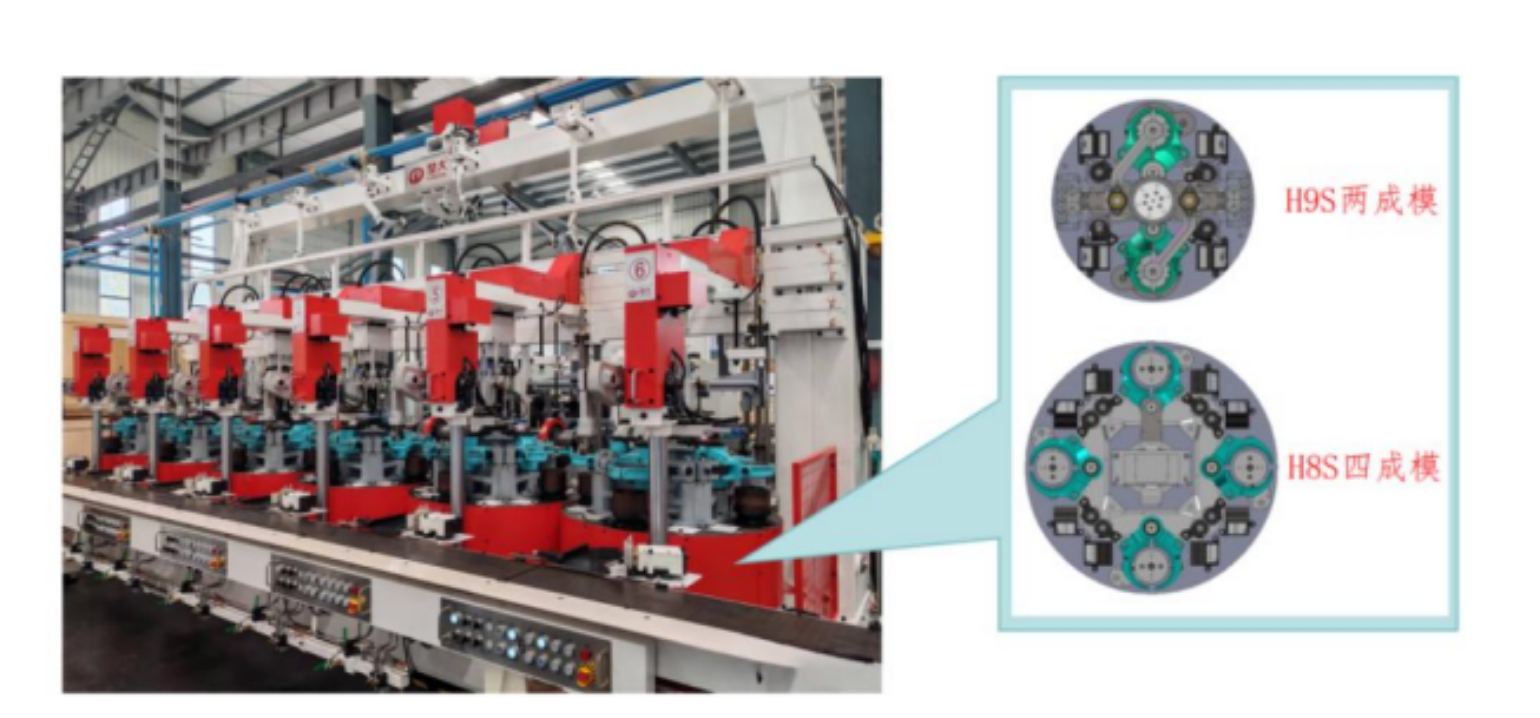
All units are lined up from left to right. Each unit is equipped with one blank mold and several rotating blow molds, enabling an alternating forming cycle where one blank mold serves multiple blow molds.
- After the glass gob is shaped into a blank in the blank mold, a servo tilter transfers the blank into the closing No.1 blow mold. Once No.1 blow mold is fully closed, the neck ring clamp retracts to start the next blank forming cycle.
- The servo turntable rotates 180° (for H9S models), moving No.1 blow mold away from the gob loading station. Meanwhile, the No.1 blow air tube runs synchronously to inflate the blank into a finished glass bottle while the blow tube remains pressed against the bottle neck.
- No.2 blow mold rotates synchronously to the loading station, and its matching blow air tube delivers blowing air simultaneously to realize alternating blow forming.
- At the bottle takeout station, No.1 and No.2 blow molds open alternately. Servo-driven grippers pick up the glass bottles and place them on the cooling dead plate for air cooling.
- Electric bottle push fingers shift the cooled glass bottles onto the front mesh conveyor belt for subsequent transportation.
2. Brief Introduction to Technical Breakthroughs of Rotary Bottle Forming Machine
The rotary bottle forming machine combines the strengths of traditional large rotary bottle machines and straight-line machines, incorporating new processes and technologies to build its exclusive technical architecture.
- Multi-unit parallel layout: The machine retains a structure of parallel independent units. Each unit runs without cross-interference during production, enabling fault isolation and fast on-site maintenance.
- One-blank-mold multi-blow-mold design: This forming process pairs one blank mold with multiple blow molds to offset mismatched cycle durations between blank forming and blow forming. It supports manufacturing a wide spectrum of glass containers, including mid-to-high-end bottles, regular seasoning bottles, wine bottles and more.
- Servo gob distribution: Driven by servo motors with toothed timing belt transmission, the gob scoop performs intermittent indexed rotation to feed glass gobs to each unit in orderly sequence.
- Servo tilting: Servo-controlled tilters convey glass blanks to blow mold stations. Acceleration and deceleration parameters are adjustable for different bottle styles to achieve gentle, flexible tilting and improve blank quality.
- Servo turntable: Servo motors power indexed rotation of the turntable to deliver high-precision repeated positioning for all blow molds; all motion parameters can be digitally adjusted with ease.
- Servo bottle takeout: Servo-driven takeout arms swing reciprocally through 180° to extract finished glass bottles from blow molds and place them on the front cooling dead plate.
- Dual synchronous blowing system: Blowing assemblies rotate in lockstep with the turntable and sustain continuous blowing throughout mold rotation. Compared with straight-line machines, it effectively extends bottle setting time within a single production cycle, drastically eliminating defects such as crooked necks, body deformation, out-of-roundness and vertical tilt, thus lifting the yield of qualified products.
- Eco-friendly & energy-saving design: The multi-blow-mold structure shortens the forced air cooling period required for forming and cuts cooling air consumption. Digital bottom air supply for blank and blow molds delivers precise airflow regulation to reduce energy waste. Multiple servo actuators replace pneumatic components, slashing compressed air usage.
- Integrated variable-weight servo feeder: When paired with a variable-weight servo feeder, the machine supports mixed-line production of up to nine distinct bottle types. It fulfills small and medium batch order demands and greatly enhances flexible manufacturing capacity.
In summary, thanks to its unique technical advantages, rotary bottle forming machines are ideal for producing complex, high-spec glass containers including mid-to-high-end bottles, cosmetic bottles and special-shaped bottles. They also meet production requirements for lightweight, thin-walled standard bottles of all types.
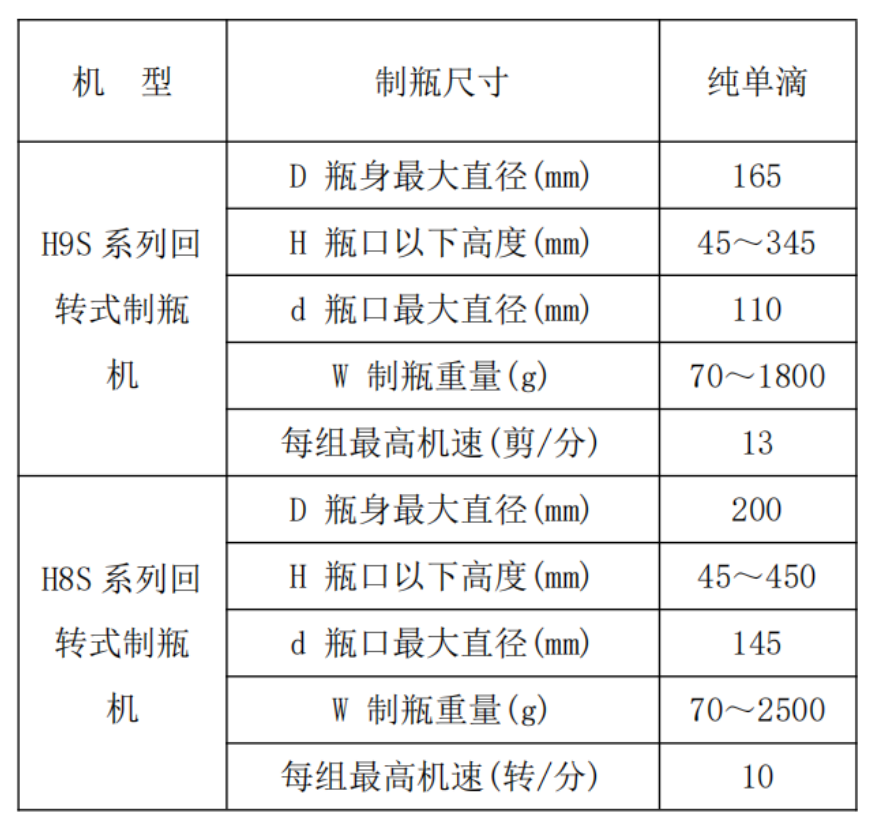
3. Production Range & Technical Specifications
4. Practical Application Verification & Performance Optimization
4.1 Representative Application Cases (6-unit Rotary Bottle Forming Machine)
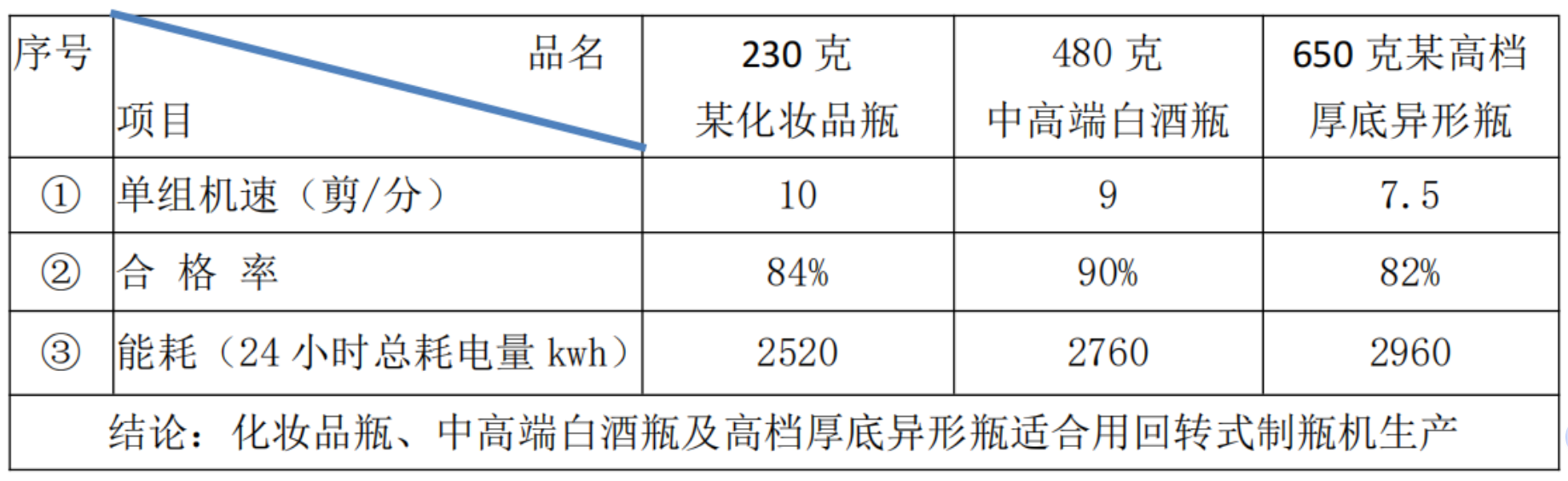
Case 1: Actual operational data of Model H9S6 manufacturing cosmetic bottles via the blow-blow forming process
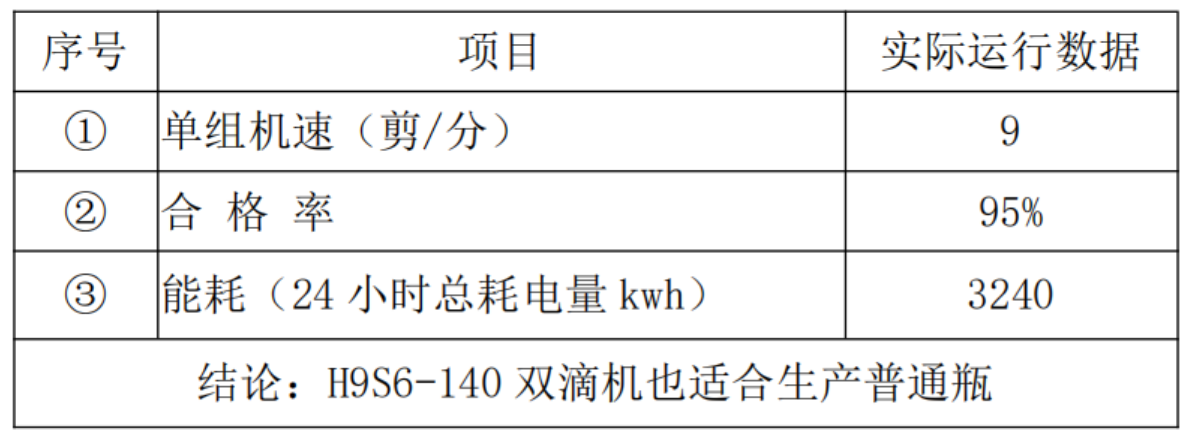
Case 2: Model H9S6-140 (double-gob machine) producing 390g standard bottles by blow-blow process
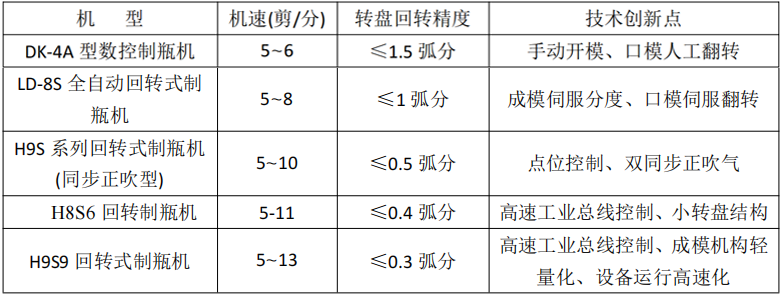
4.2 Longitudinal Performance Comparison (Based on Iterative Upgrades of Rotary Bottle Forming Machine Series)
(To be continued)
References
[1] Zhao Minsheng. History of China’s First Bottle Forming Machine (Linqu Machine)[J]. Glass, Enamel & Spectacles, Issue 3, 2020.
[2] Yang Wenfeng. A Brief History of Mechanized Manufacturing of Glass Packaging Containers
[3] Official Website of Hubei Chuda Intelligent Equipment Co., Ltd. www.chuda.cn
Source: China Daily-use Glass Association